Watches & Wonders 2026 just wrapped up in Geneva, and the sheer level of mechanical design on display was staggering. From radical new winding mechanisms to invisible complications, this year proved that horology is still pushing the absolute limits of micro-engineering.
Here is a breakdown of four of the most compelling releases and the brilliant mechanics driving them.
Vacheron Constantin Overseas Dual Time “Cardinal Points”
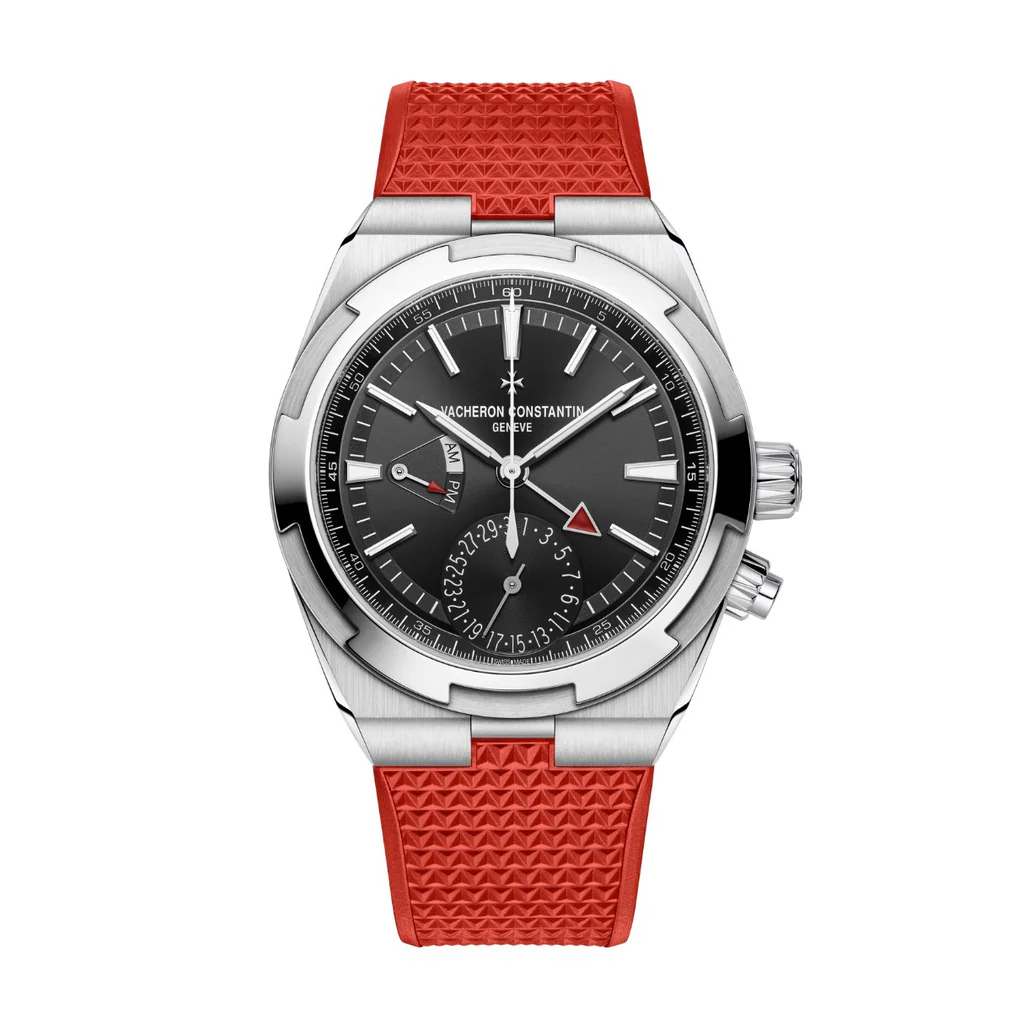
Now it’s no secerect that I LOVE Vacheron Constantin, arguably one of my favorite watch company of the Big Three; and this year they are no different. Vacheron took their iconic luxury sports watch and refined it into a true exploration instrument. Born from the 2019 Everest prototype, the new “Cardinal Points” collection features four models (North/White, South/Brown, East/Blue, West/Green) housed in highly durable brushed titanium.
The dial utilizes a highly purposeful, avionics-style approach to data display. Instead of cluttering the face, the AM/PM indicator at 9 o’clock and the contrasting central dual-time hand give you immediate, high-legibility vectoring for your home and local time.
Case: 41.0 mm Titanium (sleek, brushed body with a bead-blasted anthracite bezel).
Movement: Calibre 5110 DT/3 automatic.
Power Reserve: 60.0 hours.
Key Detail: Comes with dial-matching and bright orange rubber straps, emphasizing its role as a purpose-built tool watch.
 Credit: Vacheron Constantin
H. Moser & Cie Streamliner “Pump”
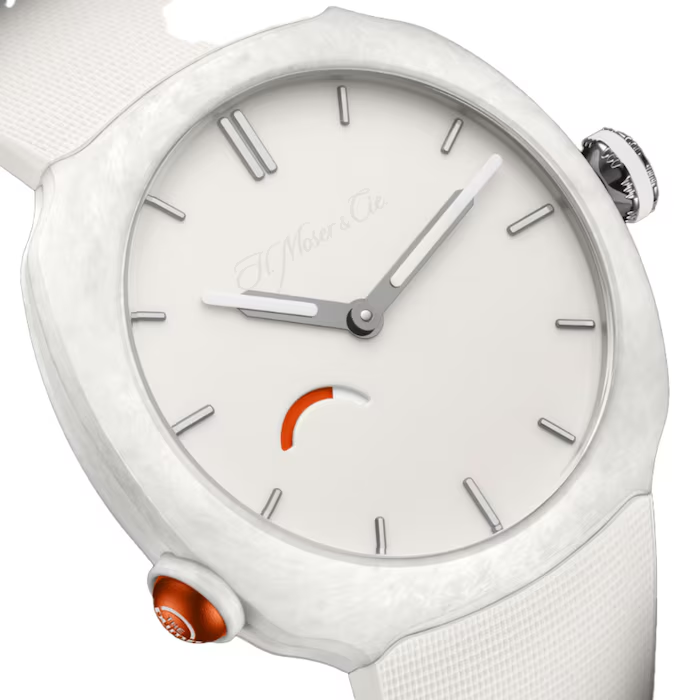
Moser decided to bring a tactile, interactive element to high watchmaking, heavily inspired by the cult-classic 1989 Reebok Pump sneaker. They completely removed the traditional crown, replacing it with an anodized aluminum pusher. Pressing the “pump” transfers linear force into rotational energy to manually wind the mainspring, with the power reserve visibly updating on the dial.
Moser approached the case construction exactly how you would design the structural components of a high-stress mechanical system. The exterior is crafted from forged quartz fibre—a composite of crushed quartz and resin compressed under intense heat to create a lightweight, marbled shell. Because quartz fibre alone isn’t enough to protect the movement from torsional stress, they anchored the mechanics inside an internal titanium “sarcophagus” to ensure maximum structural rigidity.
Case: 40.0 mm Forged Quartz Fibre (available in black or white) with an internal titanium cage.
Movement: HMC 500 manual-winding.
Winding Mechanism: Pusher-based gear train linking directly to the barrel.
Production: Limited to 250 pieces per color.
Credit: Moser & Cie
Rolex Oyster Perpetual 100 Year Edition
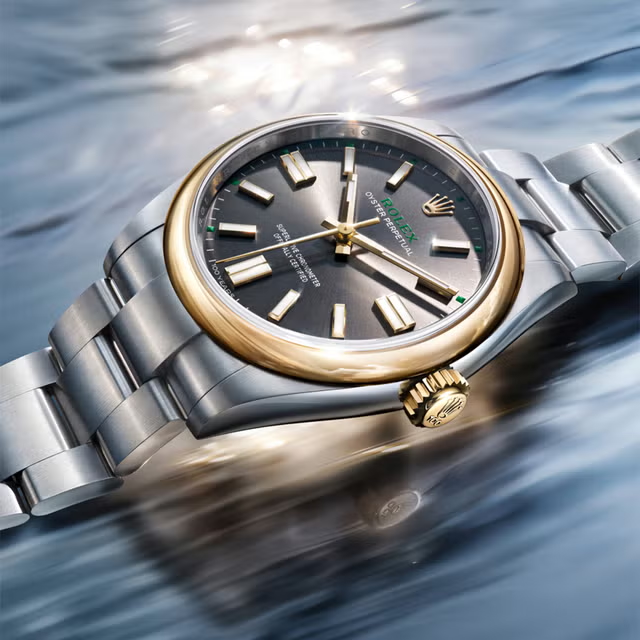
2026 marks exactly one century since the invention of the Rolex Oyster case. To celebrate, Rolex has released a centennial edition of the Oyster Perpetual (Ref. 134303 for the 41mm), bringing two-tone Rolesor to the modern OP lineup for the first time.
The Oyster Perpetual line has always been the horological equivalent of a naturally aspirated, rear-wheel-drive sports coupe: it offers a balanced, proven, and endlessly reliable platform without unnecessary bells and whistles. This 100-year edition features an 18k yellow gold polished bezel and crown, contrasted against a heavily brushed 904L Oystersteel case and bracelet. The slate sunray dial swaps “Swiss Made” at 6 o’clock for a printed “100 Years,” and features Rolex’s signature green on the 5-minute track markers.
Case: 41.0 mm (also available in 36mm and 31mm), Oystersteel and 18k Yellow Gold.
Movement: Calibre 3230 automatic with Chronergy escapement.
Water Resistance: 100 meters, secured by a Twinlock screw-down crown engraved with a subtle “100”.
Credit: Rolex
Parmigiani Fleurier Tonda PF Chronograph Mystérieux
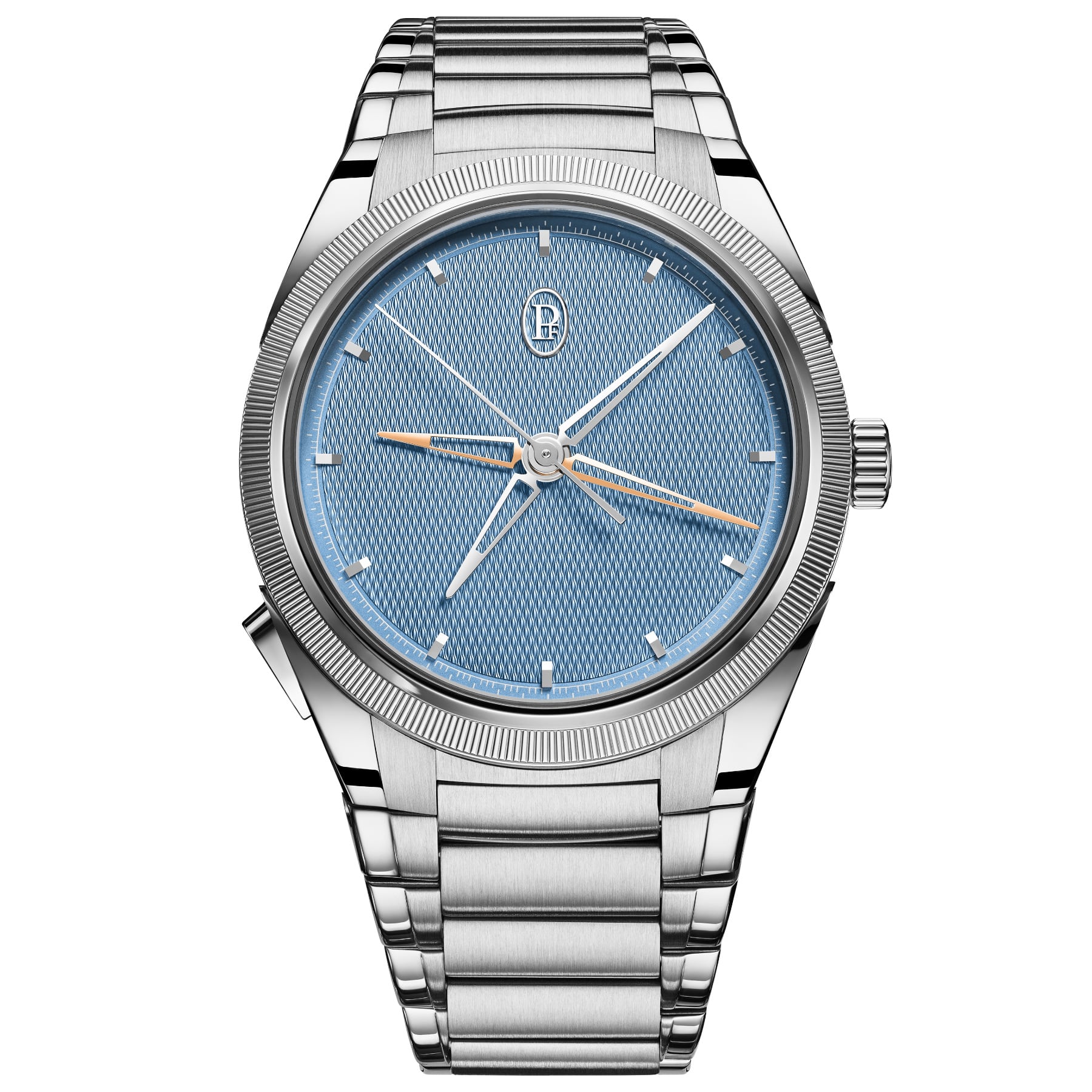
This was the absolute showstopper. Parmigiani has created a chronograph that hides in plain sight. At rest, the dial looks like an elegant, minimalist three-hand watch featuring a stunning mineral blue grain d’Orge guilloché dial.
How it works:
- Activate: Press the pusher integrated into the case at 7:30. Instantly, the three hands snap to 12 o’clock and split, transforming into active chronograph hands to count elapsed time.
- Stop: A second press stops the timing.
- Reset & Hide: A third press commands the hands to seamlessly morph back, perfectly aligning to display current civil time once again.
The Mechanics Behind It: Much like building a highly efficient, wireless sensor by ditching a bulky compute module for a lightweight, purpose-built microcontroller, Parmigiani ruthlessly stripped away the visual clutter of standard subdials, hiding massive complexity behind a clean interface.
The sheer micro-mechanical engineering required to pull this off is staggering. The brand-new PF053 movement relies on an unprecedented triple-clutch architecture (one vertical clutch and two horizontal clutches) to drive five coaxial hands from the absolute center of the dial. Managing the rigid body dynamics of this system—especially controlling the sudden shifts in counterclockwise angular velocity and clockwise angular acceleration when the hands snap back into place—requires absolute mastery over rotational forces. Squeezing 362 components into a movement just 6.90 mm thick is a triumph of spatial packaging.
Case: 40.0 mm Stainless Steel with a 950 Platinum knurled bezel.
Movement: PF053 Self-winding integrated manufacture movement.
Complication: “Invisible” central chronograph with five coaxial hands.
 Credit: Parmigiani Fleurier